
Smarter Workflows for a Demanding Industry
Packaging Solutions
Automate packaging workflows, reduce manual artwork preparation, improve production efficiency, and connect your packaging operation with intelligent workflow software from ECO3.
Smarter Packaging Workflows for a More Demanding Industry
Packaging production is changing. Your workflow should too.
Leading converters are responding to modern production challenges by replacing disconnected, manual processes with intelligent, connected workflows that automate repetitive tasks, improve visibility, and help production teams focus on higher-value work.
ECO3's packaging workflow solutions connect artwork preparation, prepress, proofing, production planning, and output into one integrated workflow—helping packaging businesses improve productivity, reduce errors, and build a more efficient operation that is ready for future growth.
Packaging Challenges
More Products. More Variations. More Complexity.
Packaging production has evolved dramatically over the past decade.
Common challenges include:
- Managing increasing numbers of SKUs and packaging variants
- Preparing multilingual and region-specific artwork
- Meeting regulatory and brand compliance requirements
- Reducing manual artwork preparation and repetitive prepress tasks
- Delivering shorter turnaround times with limited production resources
- Maintaining color consistency across presses and substrates
- Coordinating production across multiple departments or facilities
- Improving visibility from artwork approval through to production
- Supporting business growth without increasing operational complexity
For label printers, these pressures are often even greater. Frequent artwork revisions, barcode updates, changing legislation, and shorter production runs require workflows that can adapt quickly without sacrificing quality or production efficiency.
Before automation, these challenges often led to production bottlenecks, unnecessary manual intervention, increased waste, and increased pressure on experienced operators.
Why Workflow Automation Matters
Process more jobs without increasing headcount
Reduce manual touchpoints throughout production
Improve consistency between operators and production sites
Respond faster to customer changes
Reduce rework and production waste
Create a scalable workflow that supports future business growth
Business Benefits
Reduce Manual Artwork Preparation
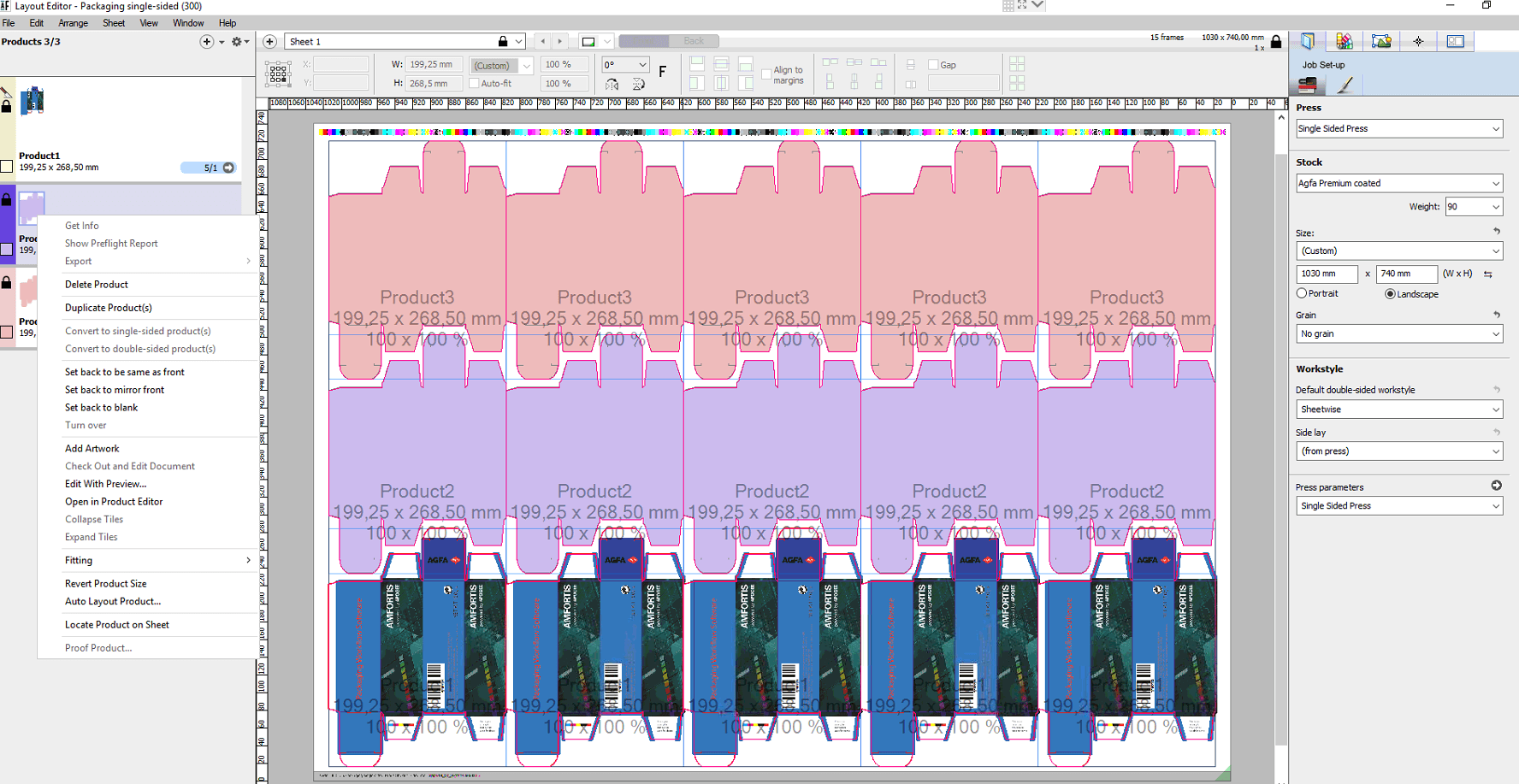
Automating repetitive tasks (i.e. preflight checks, trapping, step-and-repeat creation or proof generation) reduces operator workload, shortens preparation times, and improves consistency across every packaging job.
Business outcome
More work completed with the same team while reducing opportunities for human error.
Simplify Complex Version Management
A connected workflow helps standardize how variable data and multiple product versions are prepared and managed, making it easier to process high numbers of packaging variations accurately and efficiently.
Business outcome
Greater confidence when managing complex packaging portfolios.
Increase Productivity Without Increasing Complexity
By automating repetitive production activities, packaging businesses can increase throughput while maintaining consistent production standards and making better use of experienced staff.
Business outcome
A scalable workflow that saves time and supports long-term business growth.
Improve Production Visibility
Connected workflows provide greater visibility into job status, production queues, and workflow performance, enabling faster operational decisions and better planning.
Business outcome
Improved control across the entire packaging production process.
Support Label Production
Automation helps label converters standardize repetitive production tasks while maintaining the flexibility needed to respond rapidly to customer changes or numerous versions.
Business outcome
Faster turnaround, improved accuracy, and greater operational efficiency.
Increased Color Quality
Improve color consistency while reducing ink spend. APOGEE Balanced Screening offers award-winning print quality, while SPIR@L reduces ink spend and maintains vibrant colors.
Business outcome
Consistent, vibrant color with increased savings on ink.
A Connected Packaging Workflow
Every packaging job moves through multiple stages—from customer artwork and structural design to prepress, proofing, production planning, printing, and quality control. When these stages operate independently, valuable time is lost through manual handovers, duplicate data entry, and inconsistent processes.
Using Amfortis or Amfortis Cloud, ECO3 helps connect every stage of the workflow into one integrated production environment.
The ECO3 Packaging Workflow Approach
Successful workflow automation is about more than implementing new software. It begins with understanding how your production environment operates today and identifying opportunities to remove unnecessary complexity.
ECO3 works with packaging converters to build connected workflows that improve productivity, standardize processes, and support continuous operational improvement.
Our approach is built around five principles:
1. Understand your workflow
2. Standardize repetitive processes
3. Automate where it adds value
4. Connect business and production
5. Continuously improve
Frequently Asked Questions
What is packaging workflow automation?
Packaging workflow automation uses software to automate repetitive production processes such as artwork preparation, preflight, proof generation, production planning, and file management. It helps improve efficiency, reduce manual intervention, and create more consistent production workflows.
Who benefits from packaging workflow automation?
Packaging workflow automation is designed for folding carton manufacturers, label converters, and packaging producers looking to improve productivity, reduce production bottlenecks, and standardize workflows across their organization.
How does workflow automation improve label production?
Label production often involves frequent artwork revisions, multiple product versions, barcode updates, and short production runs.
Automation helps standardize repetitive tasks, improve file accuracy, and enable production teams to process more jobs with greater efficiency.
Can workflow automation support multiple production sites?
Yes.
Standardized workflows help maintain consistent production processes across multiple facilities while improving visibility and making it easier to share best practices throughout the organization.
How can automation help address labor shortages?
By automating repetitive production activities, businesses become less dependent on manual processes and can make better use of experienced operators.
This allows production teams to focus on higher-value work while maintaining consistent production quality.
Can packaging workflow software integrate with existing business systems?
Many packaging workflows benefit from integration with systems such as MIS, ERP, web-to-print, and other production management platforms. A connected workflow reduces duplicate data entry and improves the flow of information across the business.
How does workflow automation reduce waste?
Automated file checking, standardized production processes, and improved workflow consistency help identify potential issues earlier in production, reducing errors, rework, and material waste.
Ready to Improve Your Packaging Workflow?
Today's packaging converters need workflows that are connected, efficient, and adaptable. Whether you're managing increasing product variation, improving label production, or scaling operations across multiple sites, workflow automation can help simplify production and create a stronger foundation for future growth. Explore ECO3's packaging workflow solutions to discover how intelligent automation can reduce manual work, improve production visibility, and support a more productive packaging operation.